

Ear fullness is a common complaint among Meniere’s sufferers. It is one of the key indicators of Meniere’s along with a specific kind of hearing loss and vertigo attacks. What it feels like is hard to describe.
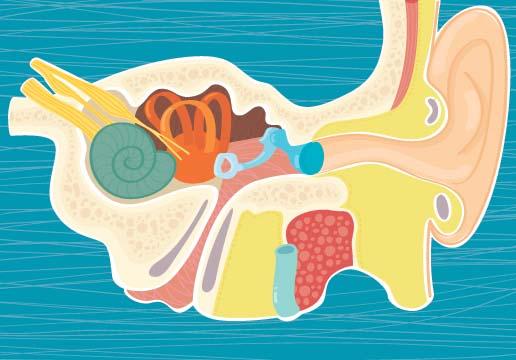
If you have ever flown in a plane or gone up in a tall building, climbed a mountain or gone down to the seashore from a high elevation, you have likely had a feeling of pressure inside your head. A pressure that is directly behind the ear canal. Frequent travelers know the feeling and what to do about it. Pulling on an earlobe, working the temporomandibular joint by shifting the jaw back and forth until the ear pops, chewing gum, etc. There are many ways to get the canals behind your ear, the eustachian tubes, to clear so that the pressure in the inner ear becomes equal to the pressure on the outside of your ear and the discomfort goes away.
Ear fullness is like that, but not like that. Imagine that kind of discomfort elevated to a level of pain that is very hard to ignore, and then imagine that you can’t get the pain that seems to be right behind your eardrum to go away, no matter how hard you chew gum, work your jaw, etc. This pain goes on for days, sometimes for weeks.
The first time the ear fullness presented itself, I sat in the shower for an hour or more trying to make what I thought was a plugged eustachian tube clear itself. What happened instead was that I induced a multi-day vertigo spell by rupturing one of the vessels in the cochlea of my left ear. As you can probably imagine, I don’t recommend that form of treatment.
That was in the spring of 1984. In the fall of 1984, the ear fullness presented itself again and I had to resist the temptation to gouge the ear out with a sharp implement. I understandably didn’t want to look like Vincent Van Gogh, who might very well have suffered from a similar affliction. Every spring and every fall after that, for twenty long years, I would go through this dance with ear pressure and hearing loss that would correct itself after each allergy season (which is what I deemed it to be, an allergic reaction. It wasn’t) then I would spend four months pretending I was healthy without a care in the world. I would take my allergy meds for the two months of symptoms and occasionally go to doctors and demand antibiotics for ear infections when the symptoms would get particularly bad, always convinced I knew exactly what I was doing.
Turned out, I didn’t know much of anything about what was happening to me:
The pressure never seemed to respond to anything. The reason why it didn’t respond to anything is because (if it is cochlear hydrops, the precursor to Meniere’s) the pressure isn’t in a place that treatments like heat therapy or antihistamines or the Valsalva Maneuver are going to be able to alter. It’s in the cochlea, which is surrounded by bone, and the fluid has nowhere to go.
A fluid imbalance in the cochlea of the inner ear produces all the symptoms of Meniere’s disease. There is no known way to reduce this pressure in the ear. It is possible that early treatment with intratympanic injections of steroids can reduce the pressure and prevent hearing loss in a newly affected ear, but it is not a universally successful treatment, and it carries potential hazards that make it an undesirable treatment for routine incidents of pain. Hazards like permanent deafness and severe instances of vertigo.
What long term treatment of the symptom looks like remains an unanswered question for me. I haven’t found anything that will work long term for ear pressure aside from a labyrinthectomy, which is surgically removing the labyrinth (I’ve now had that procedure. -ed.) In the meantime I try to limit my self-medicating to really bad days and to not let the symptoms get so bad that they reduce my quality of life. It’s a balancing act.
When I’m having ear pressure problems I routinely/habitually take a dose of guaifenesin, which does seem to help. This is what self-managed chronic illness is like, doing the things that at least seem to help and hoping that you aren’t making things worse somehow.
Postscript
I’ve revised this article a few times now. I really love the video that illustrates what hydrops does in the inner ear. I’d always failed to imagine what that looked like until watching it the first time. I’m getting scheduled now for a labyrinthectomy and cochlear implant. I’m going to be free of this pressure for the first time in forty years, I hope. Fingers crossed.