
Climbing and descending the stairs is a fraught task for the vestibularly challenged, your feet never quite go where you want them to go. Because of this, it is essential that the stair treads are kept open and free of tripping hazards.
On this particular day, there were two mail trays on the lowest stair, put there to make room for a Christmas display that took up the table where they had been previously residing. I had tripped over this particular hazard previously, and I had moved the trays to a less hazardous location because of this.
However, someone had moved these offending objects back to the location on the lowest stair tread that day, and once again I nearly took a header off the stairs while colliding with them. In a fit of rage I kicked the mail basket across the room, nearly hitting the Wife in the head. What was that about?
These kinds of outbursts seem to plague me. They’ve grown less frequent as I’ve gotten older, but clearly there is still some underlying trauma that needs to be addressed around this subject. The subject of hazard, of carelessness, of people who endanger me without thinking about the danger they are putting me in.
There was a flash of memory as I tripped over the tray a second time. A memory of children laughing at me as a fell for another one of their pranks, set up specifically to trip me up. Some of these pranks were actual attempts to kick my feet out from under me, causing me to fall and injure my wrists and hands more than once. Others were setups that would cause my (even then) poor balance to cause me to fall in some way that the watching children would find hilarious.
They would purposely trick me, and then laugh at me because I couldn’t see the trick before the trap was sprung. How many people could avoid these kinds of traps? Could anyone targeted by their peers in this fashion avoid falling down? Avoid rewarding their tormenters with amusement?
These sorts of things happening once is forgivable. It’s a joke. Get over it. For me, these encounters spanned my entire childhood. It wasn’t until the last few years of high school that I was finally free of these attempts to make me fall down so that my peers could laugh at my clumsiness.
The mail trays on the stairs were just another trap set for me, from my perspective. Someone waiting around the corner to laugh at my clumsiness one more time. So I lashed out, as I was prone to do after it became clear that I was never going to be free of this antagonization. The bullies usually found this as funny as the tripping, but there were enough of them who didn’t want to be injured themselves that I eventually convinced them that they didn’t want to antagonize me anymore.
The lashing out had worked, in my mind. So I keep doing it, because it works. Except this wasn’t something set up to injure me on purpose. This was just a careless act committed by someone who doesn’t trip over stuff they can see right in front of them.
The Wife was understandably terrified by the missile flying past her head. Terrified as I proceeded to stomp the offending object into pieces on the floor where it landed. This trickery would not be happening again!
Then I saw how scared she was. How the rest of the family walked on eggshells around me for days after that. How quickly a new mail sorter was anchored to the wall instead of being left lying around on a flat surface like everything else in the household is.
This is why the violence occurred in the first place. Violence gets things done, but at what cost? The cost of love and affection? The trust of a spouse? The trauma that children will carry with them for the rest of their lives?
There has to be a better way.
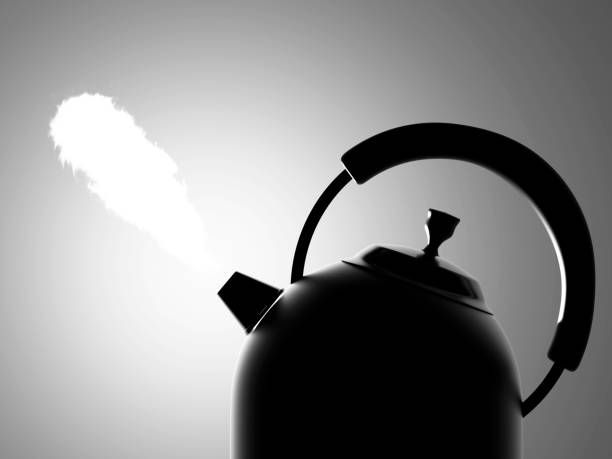
A teapot only speaks when it’s angry. It sits quietly while you fill it with water, drop in the teabags and light the fire under it. It sits there quietly until the pressure inside builds to the point where it screams its wrath at anyone within earshot. Until the pressure is taken off.
Don’t be like the teapot. Use your words. Talk it out before the pressure mounts to a boil. If you are already angry, count to 10 with a deep breath in between each numeral. Walk away from the pressure source, if you can. Watch the anger melt away, let the rider have a chance to catch that horse, then talk.