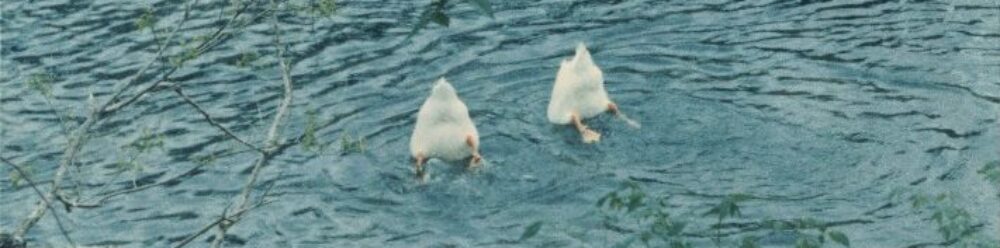


That’s the question I get most often about the cover photo. I took it on my Pentax K1000 camera over 30 years ago. Camera people will recognize that name and model, most of the rest of you will not. Pentax was one of the premiere camera makers back in the day. I did my research and selected the best manually operated camera that I could afford. We drove to Dallas to pick it up because there was no local shop that offered it at the price I was willing to pay. We made a day of it, spending time playing around in Dallas while we were there.
We lived in San Angelo at the time, which is a nice place but not a city like Dallas is. San Angelo has a personality, an indefinable something that any resident of the town knows but can’t quite put their finger on in order to describe. Dallas is a soulless metroplex like every other big city. More soulless than most because it is the business center of Texas. Corporate cities are always soulless.
I wanted a manual camera so that I could understand the process of photo creation. At that time I really thought that taking photographs was going to be my major hobby since I needed to be able to photograph prospective construction sites and construction projects. I was a budding architect at the time but didn’t know that about myself. I was just a draftsman who was being relied upon to design and create every single thing my boss wanted to build or pretend to build, with dreams of someday becoming more than just a drafting flunky in a third-rate construction company.
A few months after I bought the camera some friends of ours asked us to come visit them at their new house in Austin. I’d never been to Austin before. I heard it was supposed to be a pretty cool place to visit. We talked about it. Could we afford to go? It was an open question. Eventually we decided it was time to get out of town again, so we packed up the car and drove to Austin one Friday evening. We promptly got lost as soon as we got near the city. It’s easy to get lost in Castrovalva.
Castrovalva? It’s a classic episode of Doctor Who, the first full episode of Peter Davison’s Doctor. It is the same name as an M.C. Escher lithograph. Escher was known for the circular rhythms of his work. Waterfalls that fill the pools they spring from. Birds that turn into fish that turn into birds. Castrovalva is a city where all roads lead back to where they start, and that isn’t some whimsical Hobbit-like reflection on how all roads are joined to the road in front of your house. The roads physically curve back in on themselves because the city was a mathematical trap laid for the Doctor, or because that was Escher’s kind of kink, depending on which idea in my description of Castrovalva made sense to you.
Austin is a lot like Castrovalva unless you are driving through it on I-35. This is a problem with a lot of cities built on and defined by the watercourses around them. No roads go directly where you want to go and half of the time that you think you are going at least in the general direction you want to go, you are wasting your time because the road you are on changes names or directions or both at the same time before you end up right back where you started before, or at a dead end on a major freeway. Which is what happened to us.
We came in on the road from Llano. Not the road from Llano that connects to I-35 North of Austin, but the road that curves and winds it’s way South of Austin and turns into Loop One. At the time, it really did just turn into Loop One without warning the drivers that was happening. One minute you’re on what is clearly a Texas highway and the next minute you were on a divided freeway. Wait? Did I blink? How did I get here? There was city on either side of the road, where did it go? It was just gone. Nothing but trees as far as we could see.
These days you can see the city all around you but back then you were in the woods driving on Loop One. We didn’t panic because we had been told we could find an exit from Loop One that would get us where we wanted to go. They said we should look for Koenig Lane. So we kept driving through the woods, taking note of the exit signs as we drove North. Then the road ended.
When I say ended, I mean ended. Barricades across all six lanes in both directions. It just stopped at highway 183 and we had to exit onto 183 or get rear ended. I pulled into a convenience store parking lot that to this day I swear was just sitting there at the end of this inexplicably truncated freeway. We used the payphone to call our friends.
Payphone? You see, in the days before everyone had portable communication devices strapped to the ends of their wrists, you had to stop and pay someone to use the telephone to call other people. You had to buy maps for the cities that you wanted to visit, and those maps were printed on paper folded into some kind of origami nightmare that was generally impossible to duplicate when you wanted to fold it back up after finding out where you were.
I bought a map while the Wife used the payphone, but the map did me almost no good. There was a Koenig Lane on the index but try as I might I could not figure out where it ended or began or how to even get to it. So we made them drive out and lead us back to where ever they lived in this indecipherable maze of a city.
The next day they led us down to Zilker Park, the heart of Austin in pretty much the same way that Central Park is the heart of Manhattan; except that the roads to Central Park actually go to Central Park and not some other place entirely. We wandered around the crumbling old stone structures that had been built around the springs that had made Waterloo a place to stop long before Stephen F. Austin’s name was shoehorned in as the name of the capital of Texas.
I took hundreds of photos that day, trying to capture the essence of this new place I was seeing for the first time. While we were walking along the river that flows out of the springs, I noticed some ducks between the trees, so I pointed my camera at them to take a shot. Just as they both went under to gobble up some of the ever-present hydrilla, I took that shot. I didn’t even know I had it until months later when I got my photos back from Seattle FilmWorks.
You see children, back in the day… Oh, never mind. We got the photos back and when I saw that photo I knew I wanted a bigger copy of it than the 4×6 that they printed, and I couldn’t afford to pay Seattle FilmWorks for an 8×10. So I talked the Wife’s foster father into making me a copy of the negative down at the Police Department’s photo lab; which in turn lead into another Escher-like problem of proprietary color balancing technology and how to defeat it, which he eventually did and presented me with an 8×10 of the duck butts you see above. An 8×10 that I digitalized pretty much the day we got a scanner for the first time.
Nothing is holding the ducks underwater aside from their own hunger. What kind of monster pays someone to hold some ducks heads underwater just so they can get a picture?
First published on Patreon on February 12, 2024. Published on Ko-fi on February 16, 2024