
I’ve been contemplating this juxtaposition for at least twenty years now, ever since first seeing The Family Man in theaters when it was released. I have always insisted that the two movies I’m about to talk about were mirrors of each other; and I have never met anyone who agreed with my assessment without my having to badger them for at least twenty years beforehand.
So here goes, my all spoilers all the time comparison, starting with:
It’s A Wonderful Life (1947)
This movie opens with a voice over of angels talking to Jehovah in the form of celestial objects on the screen. Frank Capra frames the movie with this Christian theme on purpose in an attempt to anchor the What if? premise of the movie on something that the average American viewer will understand in 1947. This is the problem with every movie maker’s vision of a movie since the first motion picture was put to film “how to communicate my vision to the audience?”
Angels talking to god about the crisis being prayed about down on Earth was Capra’s method of introducing us to George Bailey and the rest of the cast of characters that make up this movie and making us care about them long enough for him to tell the story he wanted to tell.
This christian framing is the thing that set Ayn Rand against this film when she saw it on movie screens not long after she had appeared in Hollywood and started trying to make a name for herself. She completely misses the point of the movie in her criticism, focusing on the fact that the only wealthy person (which equates to a worthy person in her and every capitalist’s mind) is the evil-bad-guy antagonist of the film. Mr. Potter is a caricature, yes. A caricature that was well-played by John Barrymore, but definitely not a real person.
None of the people in the movie are real people. Are any characters in any movie real people? We believe they are real because the actors make us believe they are real. That is their job. Jimmy Stewart and John Barrymore play well off each other in the scenes where they are seen together. The entire cast of the movie put in decent efforts. The most glaring issues with the movie are the jumpy edits around animals and children that don’t quite get their lines and direction right; that and the time period when the movie was made, right after the end of World War II. Back when the harshest censorship of movies and television were in effect.
Like the coyness about the occupation of the character of Violet, the Christianity is part of the enforced innocence of the time. You couldn’t possibly admit that there were prostitutes in small town America in those days. She wears makeup, fine clothes and fine furs. Where, exactly, does she get all this money? We never know because the movie never tells us. What it does say is that she’s only seen in the street talking to men. Repeatedly. In all kinds of weather.
These things are merely a part of the fabric of the tapestry that a finished film represents. Their individual influences simply vehicles to move the story along, to progress from one point to the next. the story itself is about what makes a life wonderful. Is it the money? The travel? The ambition of one man? Or is it the interplay between people? The reliance of us all on each other over the course of time, and what each one of us brings to this banquet that is the life we’ve been given?
George thinks it’s the money, travel and ambition:
Now you listen to me. I don’t want any plastics and I don’t want any ground floors. And I don’t want to get married – ever – to anyone! You understand that? I want to do what I want to do.
imdb.com
He is never satisfied with the life he leads, as his study in his home reveals. Bridge and skyscraper models litter his personal space. Travel is always on his mind.
Mary disagrees with him. She sees that George is a bright flame and she wants to be near that flame, no matter where that takes her. No matter what that costs her. She knows that wherever he goes, she’ll go there to be with him:
I didn’t want to marry anybody else in town. I want my baby to look like you.
imdb.com
Shortly after that quote (ninety minutes into a two hour film) we get to the What if? that’s the reason for the entire movie; a crisis in the form of Old man Potter stealing a Bailey Building & Loan bank deposit from George’s absent minded uncle Billy; because that’s the kind of loathsome creature that Mr. Potter is. That most wealthy people are.
He even lords the fact that he secretly still has the stolen money over George in a later scene, telling him that he wasn’t worth the missing $8000 that George comes begging Potter for.
It’s in your pocket, you weasel!
Mr. Potter wants his Potterville, the altered town that we see after the “What if?” transformation that is about to happen. He chafes at the fact that he’s stuck in this Bedford Falls that the influence of the Bailey’s has created.
Anyone with a lick of sense knows that George’s biggest mistake was in relying on his Uncle Billy to do financial transactions after he started forgetting the really important things. I mean, really? Why is this guy trusted to make deposits at the bank in the first place? It is worth noting however that none of the people working in the Building and Loan aside from the almost non-existent character of cousin Tilly (a hive of nepotism I say! –ed.) and George himself, seems to be particularly competent.
The plot demands a crisis; and the crisis is forced upon our protagonist believably or not (some of the roughest and hard to follow film edits are in this section of the movie) the money is lost (stolen!) and the bank examiner is present to hold George accountable for this error. It is because of this comedy of errors that George contemplates suicide in order to escape the jail term that he fears is in his future.
This is when the disembodied voice we hear at the beginning of the movie (again, 90 minutes ago) finally takes form. Clarence the guardian angel jumps into the river to force George to jump in and rescue him. The on-screen energy between Henry Travers who plays Clarence and Jimmy Stewart is great, as are all the other pairings in the film. If any one of these various characters had not been able to pull their own weight with the then-fledgling Jimmy Stewart this movie wouldn’t be the screen classic that we see it as today.
You’ve been given a great gift George, a chance to see what the world would be like without you.
imdb.com
It’s a Wonderful Life is a movie anchored in tradition. Family. Church. The value of community and united effort. In today’s fractured world it is a glimpse back into a past that never really existed, but we all long to see and live in; at least, that’s what we tell ourselves. The most forward thing about the entire movie is George’s statement that he wasn’t a praying man, a bald statement of fact lost in the sea of talk about prayer and God and angels in the rest of the movie.
The world of It’s a Wonderful Life is a completely different place than the world of the film I’m about to talk about, but don’t let the uncomfortable differences fool you.
The Family Man (2000)
Like the previous iteration of this story, this movie begins with a teaser. But it’s not the teaser that anyone familiar with the previous movie would expect. There’s still a “What if?” but you don’t have to wait ninety minutes to realize that fact.
What we have together, that’s what makes us great.
Kate Reynolds – imdb.com
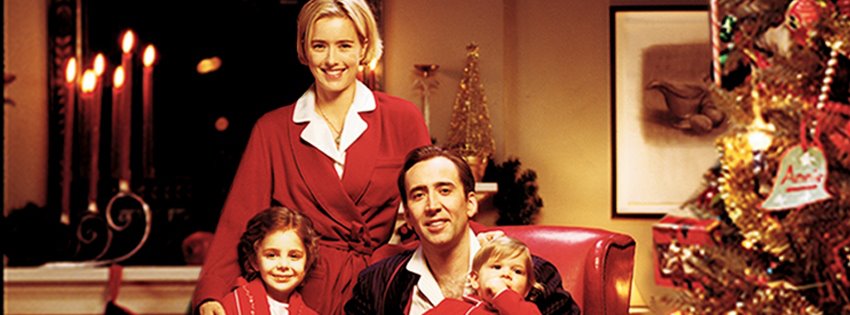
The second scene shows us that the “What if?” of George’s life has been answered already. George is now Mr. Potter, or Jack Campbell as the script names him. A man of the kind of wealth that Mr. Potter could only have wet dreams about. He’s that wealthy. He’s in the middle of a deal to land a multi-million dollar merger for his employer that he and his staff will be rewarded handsomely for.
It’s Christmas Eve and he’s working late. He even calls an emergency meeting for the next day just to make sure that the deal goes through. A slave driver pushing everyone around him to sacrifice everything for one more dollar in the coffers, even during the holidays.
This is the point where many people might think “Hey, that’s A Christmas Carol, isn’t it?” and you aren’t far wrong on that point. There is a lot of room to squint and see that story in this story. In the end it isn’t that story. It is definitely a reprise of Wonderful Life.
It’s snowing when Jack, played by Nicolas Cage, meets his guardian angel, played by Don Cheadle. We’ve come a long way since 1947. The guardian angel is black and pulls a gun in a store trying to demand payment on a lottery ticket that the cashier says is fraudulent. The end results are the same in both movies. Jack intervenes in the setup just as George intervenes when Clarence jumps into the river; and now we’re all about to go on a ride of mutual discovery as we journey into Jack’s alternative history.
You just remember that you did this, Jack, okay? You brought this on yourself.
Cash – imdb.com
The next morning we all wake up sleeping next to Tea Leoni. I’d take either one of their places in that bed, quite frankly; but Tea Leoni is a favorite actor of mine. Jack wakes up next to this beautiful woman he hasn’t seen since thirteen years ago when he left her at the airport in the first scene of the movie, and he flips out.
And you may tell yourself, “This is not my beautiful house”
Talking Heads, Once in a Lifetime
And you may tell yourself, “This is not my beautiful wife”
He steals the family’s minivan and drives back to his building in New York City where he promptly makes a fool out of himself in front of several people. He doesn’t have an apartment in the building he thinks he lives in. His name is not in the directory of the firm he thinks he works at. He ends up having to use a map to find his way back to his now real home in New Jersey, clinging desperately to the bell he was given by his guardian angel. The bell that gives wings to angels in Wonderful Life.
Never mind that they never call Don Cheadle’s character an angel. They never even give the character a name in the movie. Jack never asks him his name. His position as the architect of the lesson being learned is clear from the moment he appears on screen. He is in control. Things will last as long as they last, Jack. Now get out there and live your new life.
Only Jack’s daughter knows and believes his protestations. She has no choice. The man is clueless. No one else sees it. She sees it because she has to direct his actions even when he’s doing the basic things that every parent should be able to do mechanically even in their sleep. This man is not daddy. He’s an alien in her daddy’s body.
Welcome to Earth
He is an alien to us too, those of us expecting a heartwarming tale of nostalgia. Jack is as much Phil Conners (Groundhog Day) as he is Ebenezer Scrooge, all of them trying to find their way back to the comfort of the familiar lives they used to lead. Jack is simply not seeing what this life has to offer. The comfort of a loving family and friends. The people who will stand up for him in times of need instead of stab him in the back the next time he falters an inch in his pursuit of money.
It takes him a while to realize that he doesn’t really miss the money; which is possibly the most amusing and/or cringeworthy parts of the film based on your own perspective. He misses the comfort of not having to worry about how the bills get paid. He misses people bringing him things just because he asks for them.
Then the reality of it all hits him, when he least expected it. The thing he had made himself forget thirteen years ago when he decided to pursue money in London instead of love in New Jersey.
Oh my God. All this time, I never stopped loving you.
..and there it is ladies and gentlemen. The realization that he wasted his life on a substitute for the thing he really wanted. Love. Belonging. Commitment. All the things that are missing from his perfect life as a millionaire in NYC.
It’s snowing again when the glimpse of his other life ends, just as it was when it began. Just as it was when George was granted both of his prayers. He wakes up alone with his money again. This time he knows he’s alone and he knows that he chose to be alone. Chose the path of safe comfort over personal vulnerability. Selling comes easy to the Mr. Potters in life. Giving is much, much harder.
The movie blends many stories consciously and unconsciously. It is aware of the time and place it is made in, just like It’s a Wonderful Life is painstakingly aware of the time it occurs in. The Family Man begins and ends on Christmas day making it seem more like A Christmas Carol than it really is, and the Scrooge/Potter character is a new man after the story is told. He is ready to change his ways and not carry the burden of several fathoms of heavy chains of greed in the afterlife in both instances of that story, if you want to see it as that story.
The reason why The Family Man is more It’s a Wonderful Life than A Christmas Carol is the close focus on the family relationships that are central to both films. There are no clear morals being taught in either movie. They are both glimpses into parts of our individual lives that we can either embrace or deny. They tell us what it is really like to be human in our day to day existence.
It’s a Wonderful Life ends on a high note. Everything all tied up in a nice little bow of good feelings and a joyous celebration.
A toast to my big brother George; the richest man in town!
imdb.com
That kind of clean, happy ending isn’t there in The Family Man. It can’t be, because Jack isn’t George. Or maybe he is? Maybe he is George now that he’s had his glimpse of the life that could have been. I don’t need those kinds of solid endings every time I watch a movie. I’m happy to be left wondering sometimes, depending on the story.
The questions left unanswered are many. Will Kate (Tea Leoni) understand Jack’s apology when he offers it? Will they settle down and have the same two children or will there be any children at all now that it has been thirteen years since they didn’t get together? We’re left wondering all this as the credits roll. The ending you see will mean one thing or another based your own personal perspective. Is the glass half empty or half full? No one knows.
That’s what I like about The Family Man. That’s what makes me watch it again and again, reassuring myself that there is hope in family and not just horror. People can change. Unhappy families can sometimes become happy ones. Sometimes.