
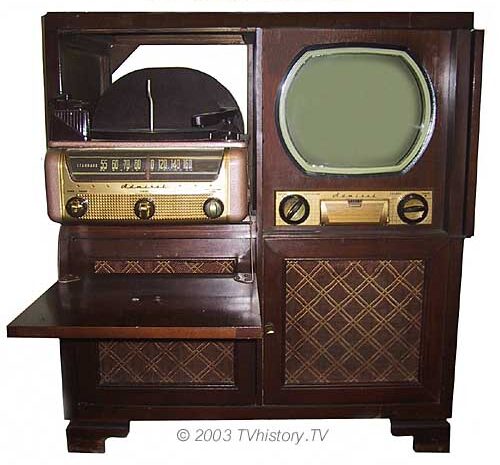
When was the last time anyone has watched TV on a CRT? Anyone? When was the last time you saw a CRT television? What is a CRT you ask? Cathode Ray Tube? You see children, way back in the days when I was growing up, Televisions were these big, bulky things built into wooden cabinets. Like radios used to be?
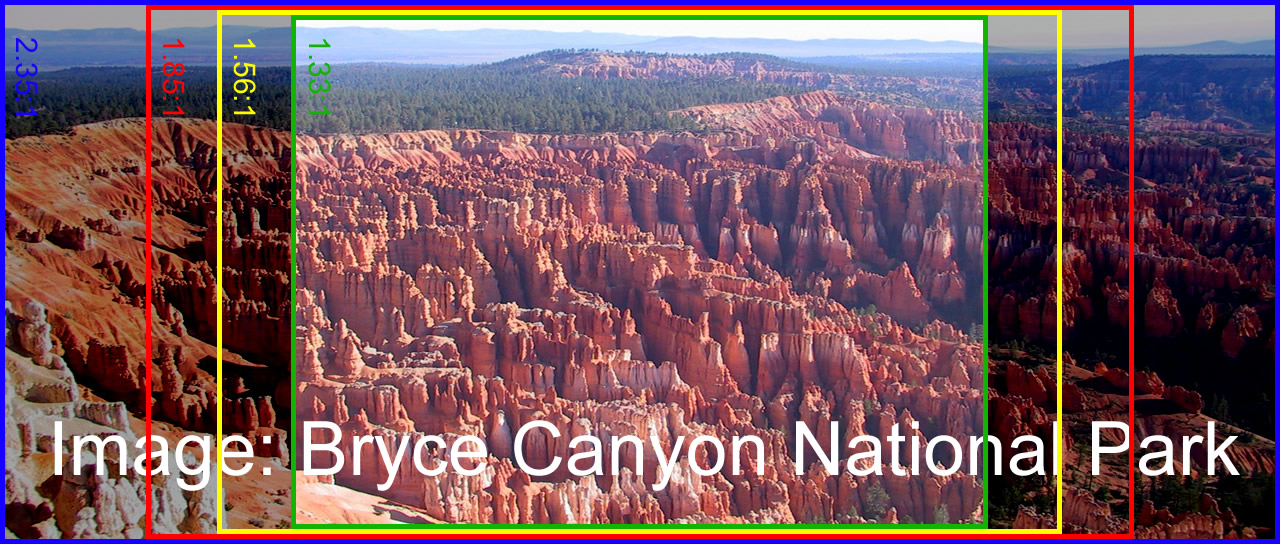
Back in those days, all televisions were the same ratio; 4:3 and this was true no matter what actual size the screen was. The ratio was always the same, because that was the way the signals were sent. The pictures only resolved on a screen that was 4:3. Television shows were all made to fit on this constrained size, and you gazed into it like a fishbowl. Stared at it from a few inches away, even though your parents told you it would ruin your eyes.
Movies, never being constrained by the limitations of the electronic gadgetry that TV had to be transmitted on, were of many sizes, and tended to be far wider than the fishbowl-like qualities of the 4:3 ratio. (At least after movies started to talk they were wider. Sound. Did we really need sound?) They could conform to the actual width of the human field of vision, and could be many, many times wider than a television screen. This was back when I was young and you could escape to giant movie houses and eat popcorn all day while watching Saturday morning serials.
Well, that is, so the city folk tell me. Being raised on the Kansas prairie, I only went to a movie house when my parents were going to the city to shop. Then we might actually not just see a movie but maybe even eat at a restaurant and go roller-skating. Roller-skating? You see children, there used to be these shoes that had wheels on them…
But back to the subject at hand.
Widescreen movies presented a problem for television producers across the nation. What to do about showing movies on television screens? You couldn’t very well leave the tops and bottoms of the screen blank. Given the course pixelation of the standard TV signal, most movies would be blurry approximations of what could be seen at the theater.
Thus was born the pan & scan version of movie presentation; in which some hack would sit in a back room somewhere and decide what parts of the film needed to be seen on the TV screen in order to communicate the intent of the scene. Since the TV producers were already editing films for audio and video content ( you can’t say fuck in front of junior, after all. Much less actually fuck in front of him. But you can kill people. Dozens of people. That’s okay) it really wasn’t that big a deal to lop off two-thirds of the movie in the form of content that was outside the 4:3 presentation.
Fast forward 40+ years and you can still find movies that are modified for televisions that are formatted in the 4:3 ratio. Even movies that were released after the TV standard was modified to 16:9. I don’t know anyone who still has a functioning CRT in their homes as their sole source of television. The Wife and I have one fishbowl left, and when it dies it will be the end of an era in this household; but I don’t watch movies on it. I haven’t watched a CRT for TV for several years, and even that device was a WEGA we got secondhand from a friend. The last time we sat down in front of a 4:3 CRT to watch television was more than a decade ago.
And still TV studios are modifying movies for broadcast on the 4:3 sets. Even on channels which aren’t broadcast (cable provided only) and aren’t required to conform to the old broadcast standards. Why is this format still being indulged? Why take the time to modify films to comply with this outdated standard? Who knows.
I can still recall a conversation with a friend back at the dawn of time, in which she lamented that she hated it when the TV studios put black bars at the top and bottom of the screen, that she much preferred it when the picture covered the whole screen. I’m sure she and others will object to the bars at the tops and bottoms of current widescreen TV’s, because the movies are still shot wider than even the 16:9 format. I wonder what they will think of the huge black bars at either sides of their 16:9 sets?
Why are they putting black bars there?
I couldn’t agree more. I think we should zoom in on that 4:3 image until the closeups look like we’re doing throat inspections.
Featured image: tvhistory.tv – 1949 Admiral 32X15
Postscript
I think Pan & Scan finally died with the death of the DVD format. I really can’t say for sure because I haven’t watched a cable show or a broadcast network since the last time I was in an airport lounge, and all they show is CNN. Still, I can’t imagine taking the time to Pan & Scan for 4:3 CRT sets anymore. Are there any of them still out there working?