
It would be silly, of course, to be either ‘for’ or ‘against’ modernity tout court, not only because it is pointless to try to stop the development of technology, science, and economic rationality, but because both modernity and antimodernity may be expressed in barbarous and antihuman terms.
I do not know what postmodern is and how it differs from the premodern, nor do I feel that I ought to know.
Leszek Kołakowski
Typical of my attempts to title things, this brief blurb’s title largely misses the mark. The kernel this article is based on was another one of the things I wrote on those dead DanCarlin.com boards. It might even have been one of the last things I wrote. I’m sure I had some deeper point I was planning on making when I copied parts of the thread here, but like far too many of my plans this one also went nowhere.
How to distinguish what I wrote then from what I’m writing on the blog? Hmm, that is a puzzler. How about the quote I selected from the OP’s referenced Federalist article that thrashes Star Trek and liberalism? Yes, that shall be the demarcation point. What juicy bit of bullshit should I select from that piece, though? That is the next question.
My comment on the forum was a critique of a critique that attempted to show the correlation between the decline of liberalism and the decline of Star Trek as a franchise. The postmodernism allusion was probably in reference to the now well-known belief that we live in a post-truth world.
As if truth, reality, causality, cares about human problems; a hallmark of my issue with everything postmodern. Reality continues being exactly what it was before, while the people living in it tell themselves different lies that explain it and believe that their lies change the existence of reality when it never even notices the lies told about it.
How Star Trek Explains The Decline Of Liberalism
Over nearly 50 years, “Star Trek” tracked the devolution of liberalism from the philosophy of the New Frontier into a preference for non-judgmental diversity and reactionary hostility to innovation, and finally into an almost nihilistic collection of divergent urges. At its best, “Star Trek” talked about big ideas, in a big way. Its decline reflects a culture-wide change in how Americans have thought about the biggest idea of all: mankind’s place in the universe.
The Federalist
In Timothy Sandefur’s defense, he does understand the degradation of Star Trek from a philosophical looking glass into the mindless action-entertainment that it has become. This is why I haven’t considered myself a Trek fan since the Abramanation aired. I deemed Trek dead on the day that film released.
However, like nearly all things conservative, the author radically oversimplifies trends to prove his ideological point. As an example, Star Trek: The Undiscovered Country aired after Roddenberry died; but the multi-year rehabilitation of the Klingons that preceded his denouncement of their portrayal in Star Trek 6, starting with Worf on The Next Generation Enterprise, is completely left out.
Worf is left out because it complicates the point he’s trying to make in his diatribe against liberalism. Liberalism which should more accurately be labeled as neoliberalism, the politics of Bill and Hillary Clinton and their associated power structure.
Section 31: Time Incursion Alarm!
RAnthony from 2025 enters the chat.
With the election of Trump (a year after this was published on the blog) conservatives embraced the postmodernist mumbo-jumbo that Timothy Sandefur and The Federalist are decrying as the death of liberalism.
Since it’s always now on the internet, I can go back in time to this article from the phantasmagorical future and inform the 2015 Timothy Sandefur that he will one day attempt to rehabilitate the Klingons himself (Well, the Federalist website he was writing for at the time will, anyway) The model for the Klingon’s are the USSR in 1966 (The Chinese were the Romulans. I think) and in 2025 these bunch of chuckleheads will try to abandon the United State’s historical allies, the Western Democracies we helped to rebuild in our own image, while attempting to bring Chancellor Gorkon himself into the Federation without requiring he stop killing his own people first.
Worse than that, they will elect leaders to the Federation that want to start treating Federation citizens the way that the Klingons treat other Klingons, as if anyone actually wants to be treated like a Klingon. Donald Trump is every bit as bad as Vladimir Putin is and should be resisted to the same degree.
Welcome to the decadence club, boys! Enjoy the long climb down the stairs to irrelevance that you were convinced liberalism was on. Neoliberalism went where you are going now. Liberalism and progressivism will long outlast you because they will always be the unrealized future. I wonder if we’ll miss you when you are gone?
Section 31: Time Incursion Sealed
As usual, the intent to decry the ideology of another while uplifting one’s own inevitably leads to hypocrisy on the part of the writer. This is a serious problem with most conservatives these days. The real culprit here is not liberalism, but postmodernism. This is an illness that afflicts all modern ideology, philosophy and politics alike, not just Star Trek and not just liberalism.
Postscript
Some semblance of the above is where I left the copied and pasted comment on the blog for two and a half years. Why? Because I always aspire to know more than I know. I plan on getting a Ph.D. in philosophy and then being able to discourse at leisure about the minutiae of Postmodernism in the modern world…
…and then I realize that I’m not going to spend that kind of time getting a pretty useless degree and without it I don’t know enough to be able to denounce internet trolls that pretend to have those kinds of degrees. Which brings the entire edifice crashing down (I do know something about architecture. Fiddlesticks on your philosophy Ph.D) and then I abandon the work entirely.
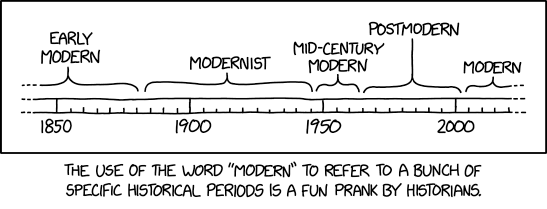
Postmodernism is an active ill in society, of that much I am certain. We can know things about the world around us, and not everything in existence is dismissible as the delusions of a weak mind. How we can know these things is a task for epistemology to reason out. That we do know them (existence exists) is not really in question here.
Postmodernism, the school of thought that proclaimed ‘There are no truths, only interpretations’ has largely played itself out in absurdity, but it has left behind a generation of academics in the humanities disabled by their distrust of the very idea of truth and their disrespect for evidence, settling for ‘conversations’ in which nobody is wrong and nothing can be confirmed, only asserted with whatever style you can muster.
Daniel Dennett